SaaS Tools for Enterprise
Enterprise buying comes down to which plan holds the controls you need: SSO, roles, a sandbox, regional hosting and a signed agreement. Most vendors below price that plan by quote. Amplitude, Zendesk, Segment and Chargebee list their enterprise features but not their prices, while HubSpot lists Marketing Hub Enterprise at $3,600 a month and Customer.io lists Premium from $1,000. Everything here was read from each vendor's own pages on 7 October 2026.
Amplitude
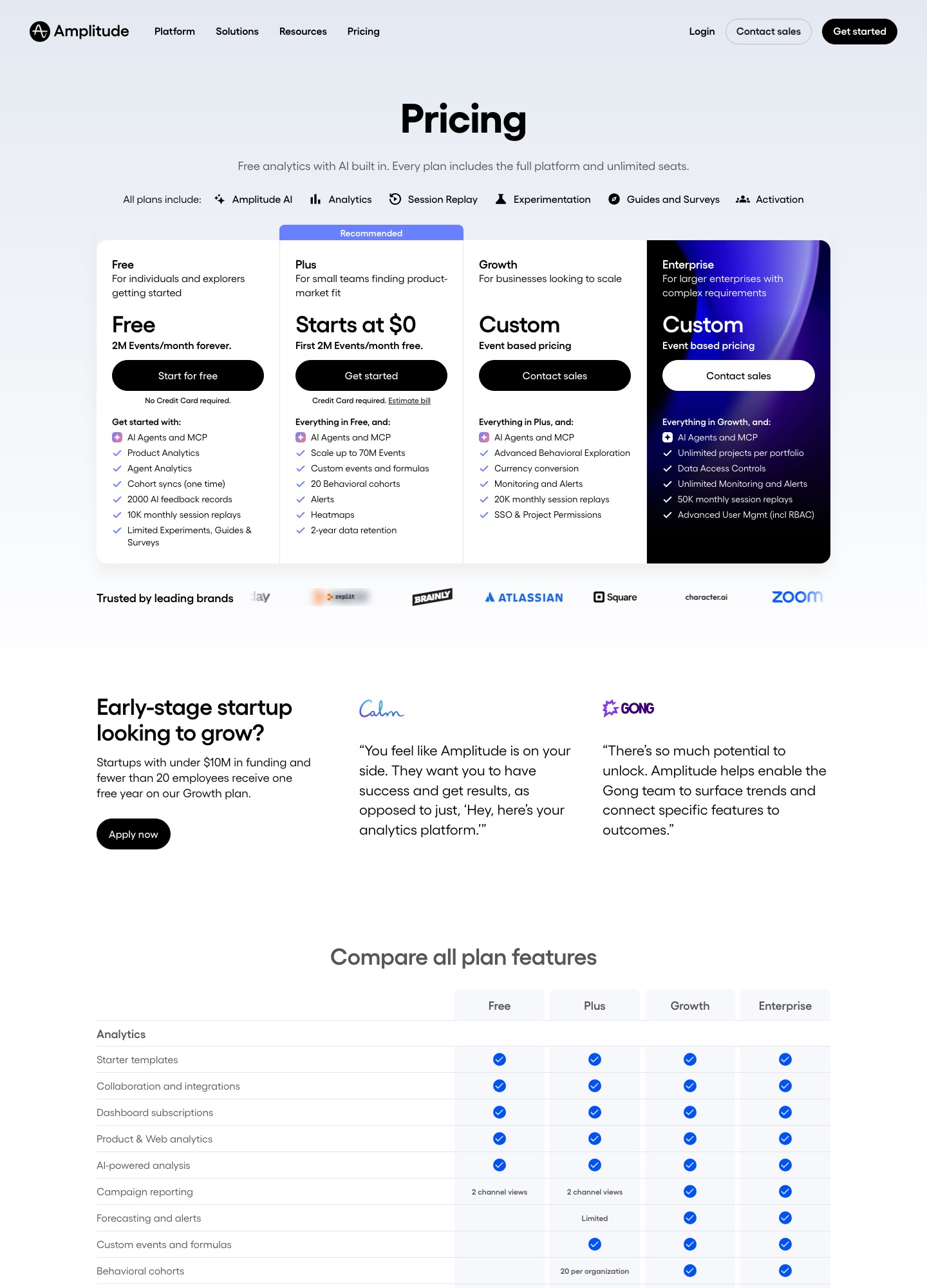
Product analyticsProduct analytics. Its Enterprise plan lists unlimited projects per portfolio, data access controls, unlimited monitoring and alerts, 50K monthly session replays and advanced user management including RBAC; SSO and project permissions start on Growth.
Zendesk
SupportCustomer service. Suite Enterprise + Copilot adds approval workflows, a sandbox environment and custom agent roles on top of Suite Professional. Priced per agent per month, paid yearly.
Segment
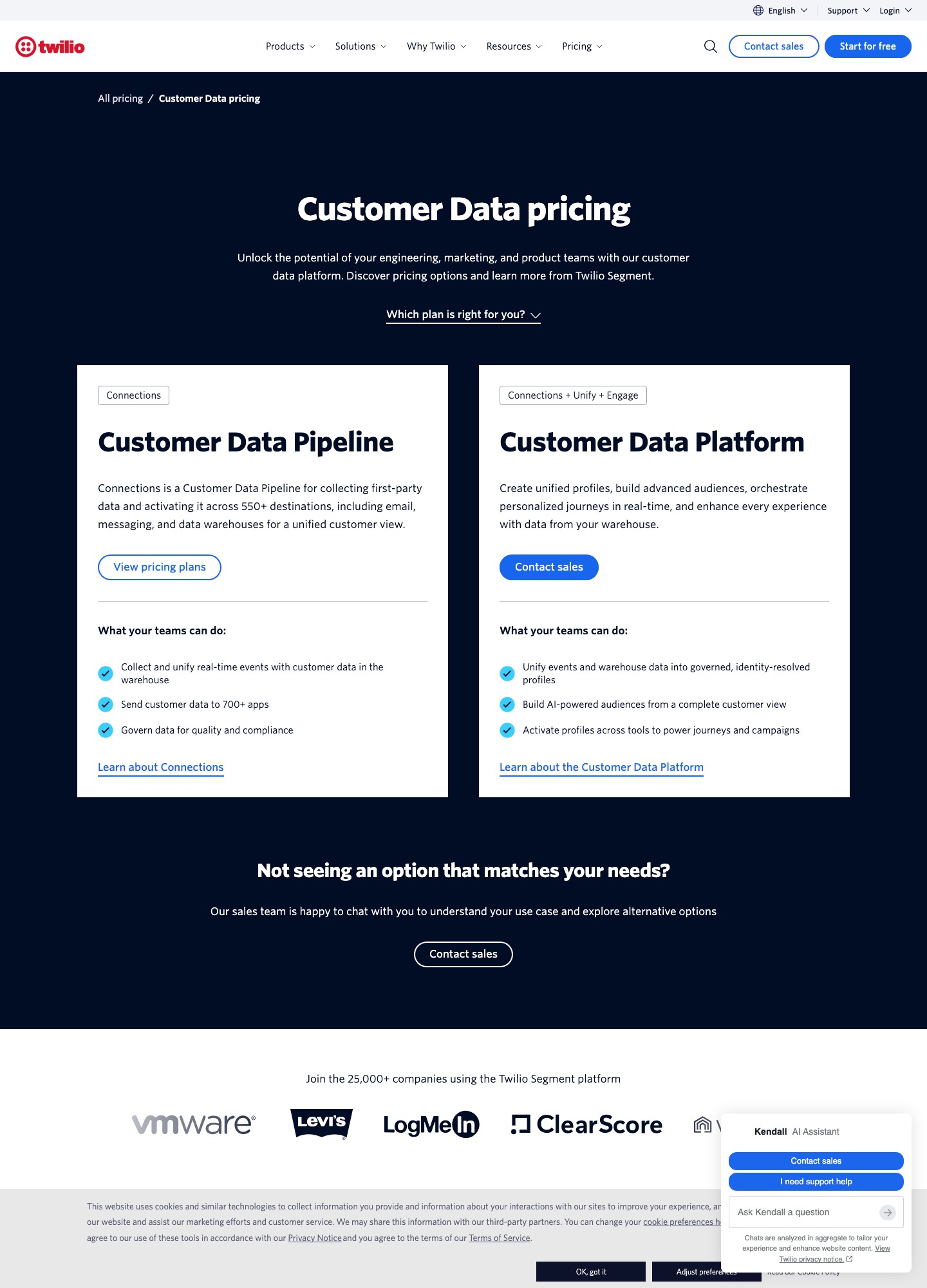
Data platformCustomer data pipeline and platform. Unlimited seats on both plans, payment by invoice, and regional infrastructure in Europe and the United States. Protocols data governance is an add-on on the Pipeline plan.
Chargebee
BillingSubscription billing. The Enterprise plan is for companies running billing at global scale with multiple business entities and parent-child account hierarchies, and adds multi-entity management, contract terms and on-demand discounting.
Gainsight
Customer successCustomer success platform for retention and expansion, sold through a demo. Use its pricing page and a demo to confirm the plan, roles and security terms your procurement team requires.
What each vendor's top tier lists
| Vendor | Top tier | Price shown | Controls and terms it lists |
|---|---|---|---|
| Amplitude | Enterprise | Custom, event-based | Data access controls, RBAC, unlimited projects per portfolio |
| Zendesk | Suite Enterprise + Copilot | Talk to sales | Approval workflows, sandbox, custom agent roles |
| Segment | Customer Data Platform | Pricing on request (quote-based) | Unlimited seats, invoice payment, EU and US regions |
| HubSpot | Marketing Hub Enterprise | $3,600 a month | Unlimited automation actions plus omni-channel automation |
| Customer.io | Premium | From $1,000 a month, billed yearly | Custom profile volume, 10 object types, premium support |
| RudderStack | Enterprise | Custom | HIPAA, SSO, 5-minute warehouse sync, unlimited transformations |
| Intercom | Expert | Per seat per month | SSO, HIPAA support, SLAs, 50 free Lite seats |
| Braze | Enterprise edition | Pricing on request (quote-based) | Enterprise-grade orchestration and governance; no charge per seat |
| Pendo | Ultimate | Pricing on request (quote-based) | SOC 2, GDPR and HIPAA compliance listed for the platform |
| Chargebee | Enterprise | Schedule a demo | Multi-entity management, account hierarchy, contract terms |
How enterprise pricing is built
The plan page tells you the pricing unit even when it hides the price, and the unit decides how the bill grows. Segment prices on monthly tracked users with custom volume and unlimited seats. Braze bills on active users, platform edition and flexible credits and says it charges no seat tax. Amplitude and RudderStack price on events. HubSpot, Zendesk and Intercom price per seat or per agent, so cost rises with headcount, and Intercom adds usage on top: its Fin AI agent is priced at $0.99 per outcome. At 10,000 outcomes a month that usage line alone is $9,900.
The practical rule is to model the unit that will grow fastest in your business and ask each vendor to quote against it. A support organization that doubles its agent count pays double on a per-seat tool. A product that doubles its tracked events pays more on an event-priced analytics tool but nothing extra on one priced by users.
When the published tier is enough
Some vendors publish a price at the level an enterprise might need. HubSpot's Marketing Hub Enterprise at $3,600 a month and Professional at $800 a month show what a step up costs, and what you get for it is listed in its feature table, such as unlimited automation actions. Customer.io lists Premium from $1,000 a month billed yearly with custom profile volume and premium support, against $100 a month for 5,000 profiles on Essentials. If your need is volume rather than governance, a lower published tier can cover it.
What to ask beyond the plan page
The plan page lists features. Procurement needs documents, and vendors keep them in different places. Ask each shortlisted vendor for these before you negotiate price:
- Which plan holds SSO. It is not always the plan named Enterprise: Amplitude lists SSO from Growth and Intercom from Expert.
- A data processing agreement and security report. Pendo and Userpilot list SOC 2, HIPAA and GDPR on their pricing pages; ask for the current report rather than relying on a page.
- Where data lives. Segment lists regional infrastructure in Europe and the United States, and PostHog lets you choose US or EU cloud. Confirm which regions each tool supports before the legal review.
- A sandbox. Zendesk's top suite tier lists a sandbox environment, and Chargebee lists higher limits on sandboxes as an add-on. If your change process requires testing before production, price it in.
- What happens at your limits. RudderStack's free plan stops processing after a second consecutive overage, and Segment's pricing page does not publish overage rates at all. Get the overage rule in writing.
Run a proof of one real workflow end to end in each tool before you sign: one data source in, one governed change through a sandbox, one report out. A procurement checklist cannot show you how long that takes.
Related comparisons
Start with Iterable vs Braze for enterprise engagement platforms, Segment vs RudderStack for the data pipeline, Braze vs HubSpot, and PostHog vs Amplitude for analytics. Smaller teams can start from tools for startups, and the enterprise SaaS tool selection guide covers the process.
Enterprise SaaS tools: common questions
Which enterprise SaaS tools publish their prices?
Few. HubSpot lists Marketing Hub Enterprise at $3,600 a month, Customer.io lists Premium from $1,000 a month billed yearly, and RudderStack lists a Growth plan at $265 a month for 1 million events with Enterprise custom. Amplitude, Segment, Zendesk, Braze, Pendo and Chargebee leave enterprise pricing to a conversation with sales, so you should plan the budget around a quote.
What is the difference between per-seat, per-user and per-event pricing?
Per-seat pricing, as at HubSpot, Zendesk and Intercom, grows with the number of employees who log in. Per-user pricing, as at Segment (monthly tracked users) and Braze (active users), grows with your audience and charges no seat fee at Braze. Per-event pricing, as at Amplitude and RudderStack, grows with how much you track. Pick the unit that will grow slowest for your product.
Do enterprise plans always include SSO?
No. Amplitude lists SSO and project permissions from its Growth plan, Intercom lists SSO on Expert, RudderStack lists SSO under Enterprise, and Segment lists Single Sign-on as a feature row without a readable plan breakdown on its pricing page. Check the exact plan that holds SSO before you put a tool on a shortlist, because it is often one tier below the one a vendor labels Enterprise.
Should a startup buy enterprise tiers early?
Rarely. Several vendors publish lower tiers that cover most needs: Amplitude's Free plan offers 2 million events a month, RudderStack's Free plan offers 250K, and Customer.io's Essentials starts at $100 a month. Move up when a customer's security review asks for something specific, such as SSO, a sandbox or a signed agreement, and name the plan that provides it.