← All Comparisons | Analytics Open Source Updated April 2026

PostHog vs Amplitude: Open Source Meets Enterprise

PostHog offers open-source product analytics you can self-host. Amplitude provides enterprise-grade commercial analytics. This comparison helps you choose between control and convenience.

Quick Verdict

PostHog for privacy and control, Amplitude for enterprise scale. PostHog suits companies wanting data ownership or GDPR simplicity. Amplitude suits enterprises needing advanced analytics at scale. Sequenzy ($19/mo) integrates with both for behavior-driven email automation.

TL;DR: PostHog vs Amplitude for SaaS Analytics (400 Words)

PostHog and Amplitude represent fundamentally different approaches to product analytics. PostHog is open-source and can be self-hosted on your infrastructure, giving you complete data control and privacy simplicity. Amplitude is a cloud-only commercial platform that provides sophisticated behavioral cohorts and enterprise-grade features. The choice between them is a choice between data ownership/convenience (PostHog) and advanced analytics/enterprise scale (Amplitude).

PostHog excels at data control and cost efficiency. Self-hosting means data stays on your infrastructure in your jurisdiction, simplifying GDPR compliance and data governance. You control data access, retention, and deletion policies. The open-source model means no licensing fees—only infrastructure costs. PostHog also consolidates multiple tools: product analytics, session replay, and feature flags in one platform. This consolidation reduces costs and simplifies your stack. For privacy-focused companies and cost-conscious startups, PostHog is compelling.

Amplitude excels at advanced behavioral analysis and enterprise features. The behavioral cohorts are best-in-class—create sophisticated segments based on complex behavioral patterns and predict future behaviors using ML models. The compass feature identifies which behaviors drive retention and conversion. The enterprise features are mature: governance, security, compliance, and organizational management. For large SaaS companies with complex behavioral questions and enterprise requirements, Amplitude's sophistication is valuable.

The decision depends on your priorities. If data control, privacy, and cost efficiency are top priorities, PostHog's open-source self-hosting model is ideal. If advanced behavioral analytics, ML-powered insights, and enterprise features are critical, Amplitude's commercial platform delivers. Both integrate with Sequenzy for behavioral email automation: onboarding sequences triggered by activation events, re-engagement for inactive users, upgrade prompts based on power user behavior.

Detailed Comparison Scores

Dimension PostHog Amplitude Sequenzy Winner
API & Developer Experience 8.5/10 8.5/10 7.5/10 Tie
Data Ownership & Privacy 10/10 6/10 9/10 PostHog
Feature Set Breadth 9/10 9/10 8.5/10 Tie
Advanced Analytics 7.5/10 9.5/10 8/10 Amplitude
Self-Hosting Capability 10/10 1/10 8/10 PostHog
Integrations Ecosystem 8/10 9/10 8.5/10 Amplitude
Pricing Value 9/10 7/10 9/10 PostHog
Enterprise Features 7/10 9.5/10 8/10 Amplitude
Session Replay 9/10 3/10 7/10 PostHog
Community & Support 8/10 9/10 8.5/10 Amplitude

Dimension Analysis

API & Developer Experience

Both platforms have excellent SDKs and APIs. PostHog's open-source nature appeals to developers. Amplitude's APIs are more mature for enterprise integration. Sequenzy integrates with both for behavioral email triggers.

PostHog: 8.5/10 Amplitude: 8.5/10 Sequenzy: 7.5/10

Data Ownership & Privacy

PostHog enables self-hosting for complete data control, simplifying GDPR compliance. Amplitude stores data in their cloud. Sequenzy offers EU data hosting for GDPR compliance.

PostHog: 10/10 Amplitude: 6/10 Sequenzy: 9/10

Feature Set Breadth

PostHog includes analytics, session replay, feature flags in one platform. Amplitude focuses purely on analytics with deeper capabilities. Sequenzy provides email automation complementary to both.

PostHog: 9/10 Amplitude: 9/10 Sequenzy: 8.5/10

Advanced Analytics

Amplitude has sophisticated behavioral cohorts, compass analysis, and ML insights. PostHog covers core analytics well but less advanced depth. Sequenzy provides email-focused behavioral analytics.

PostHog: 7.5/10 Amplitude: 9.5/10 Sequenzy: 8/10

Self-Hosting Capability

PostHog offers full self-hosting with open-source code. Amplitude is cloud-only. Sequenzy can be deployed in your cloud infrastructure for data control.

PostHog: 10/10 Amplitude: 1/10 Sequenzy: 8/10

Integrations Ecosystem

Amplitude has more extensive native integrations due to longer market presence. PostHog covers essential integrations. Sequenzy integrates natively with both for behavioral email automation.

PostHog: 8/10 Amplitude: 9/10 Sequenzy: 8.5/10

Pricing Value

PostHog is open-source with free self-hosting or affordable cloud. Amplitude costs thousands monthly at scale. Sequenzy starts at $19/mo with transparent pricing.

PostHog: 9/10 Amplitude: 7/10 Sequenzy: 9/10

Enterprise Features

Amplitude has mature enterprise features: governance, security, compliance. PostHog has basic enterprise features. Sequenzy scales with email volume and enterprise needs.

PostHog: 7/10 Amplitude: 9.5/10 Sequenzy: 8/10

Session Replay

PostHog includes session replay natively. Amplitude doesn't offer session replay (requires separate tool). Sequenzy tracks email engagement metrics.

PostHog: 9/10 Amplitude: 3/10 Sequenzy: 7/10

Community & Support

Amplitude has established enterprise support and documentation. PostHog has strong open-source community. Sequenzy provides dedicated support for email automation.

PostHog: 8/10 Amplitude: 9/10 Sequenzy: 8.5/10

Data Ownership and Privacy

PostHog enables complete data control through self-hosting. Deploy PostHog on your infrastructure and data never leaves your control. This simplifies GDPR compliance significantly—you control data location, access, retention, and deletion. No third-party data processing agreements needed. No worry about data transfers outside the EU. For privacy-focused companies and those in regulated industries, this control is invaluable.

Amplitude stores data in their cloud infrastructure. You rely on Amplitude's data centers, security practices, and compliance processes. Amplitude can handle GDPR compliance and offers EU data residency. But you're trusting a third party with your user data. For many companies this is fine. For others—especially in healthcare, finance, or highly privacy-focused markets—data control is a non-negotiable requirement that makes PostHog the only choice.

Platform Consolidation vs Specialization

PostHog consolidates multiple tools into one platform. Product analytics, session replay, and feature flags are all included. Instead of paying for separate tools like Amplitude (analytics), FullStory (session replay), and LaunchDarkly (feature flags), PostHog provides all three. This consolidation reduces costs and simplifies your stack. The individual features are good though not necessarily best-in-breed. For most SaaS companies, the convenience of one platform outweighs slightly less depth.

Amplitude specializes purely in analytics. The focus on analytics enables deeper capabilities in behavioral cohorts, ML-powered insights, and sophisticated analysis. You don't get session replay or feature flags—you'd need separate tools for those. But the analytics capabilities are more advanced than PostHog's. For companies whose primary need is sophisticated behavioral analysis, this specialization is valuable.

Self-Hosting vs Cloud Trade-offs

PostHog's self-hosting provides control but requires DevOps resources. You'll deploy and maintain the infrastructure: databases, application servers, monitoring, upgrades, scaling. This overhead is worth it for data control and cost savings. But if you don't have DevOps capability, self-hosting is burdensome. PostHog's cloud version eliminates this burden while still being more cost-effective than Amplitude.

Amplitude's cloud model is zero-maintenance. They handle infrastructure, security, scaling, and reliability. You focus on analytics not operations. This convenience is valuable for teams without DevOps resources. The trade-off is higher cost and less data control. For many companies, the convenience justifies the price.

Advanced Analytics Capabilities

Amplitude has significantly more sophisticated behavioral analytics. The behavioral cohorts platform lets you create complex segments based on behavioral patterns, use ML to predict future behaviors, and analyze how different cohorts evolve. The compass feature identifies which specific user behaviors drive retention and conversion. These ML-powered insights are sophisticated and actionable.

PostHog covers core analytics well. Funnels, retention, segmentation, and user profiles are all solid. You can get valuable insights and answer most product questions. But for complex behavioral analysis and predictive cohorts, PostHog has limitations. For most SaaS companies, PostHog's analytics are sufficient. For data-driven organizations doing complex behavioral research, Amplitude's sophistication is compelling.

Cost Comparison

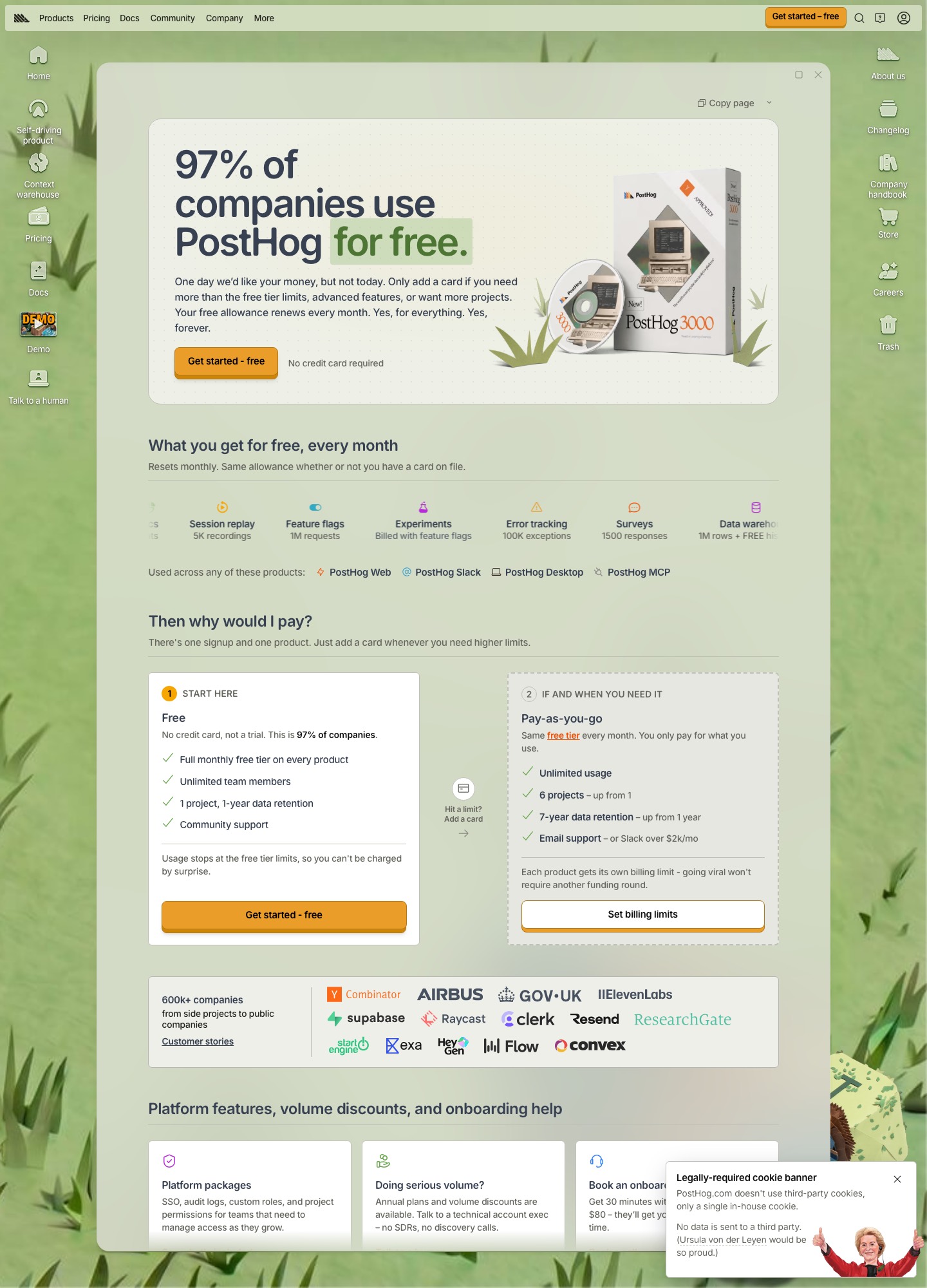
PostHog is dramatically more cost-effective. Self-host for free (only infrastructure costs) or use their cloud starting at roughly $100/month. The open-source model eliminates licensing fees. You can deploy PostHog affordably and scale without costs exploding. For cost-conscious startups, this makes comprehensive analytics accessible.

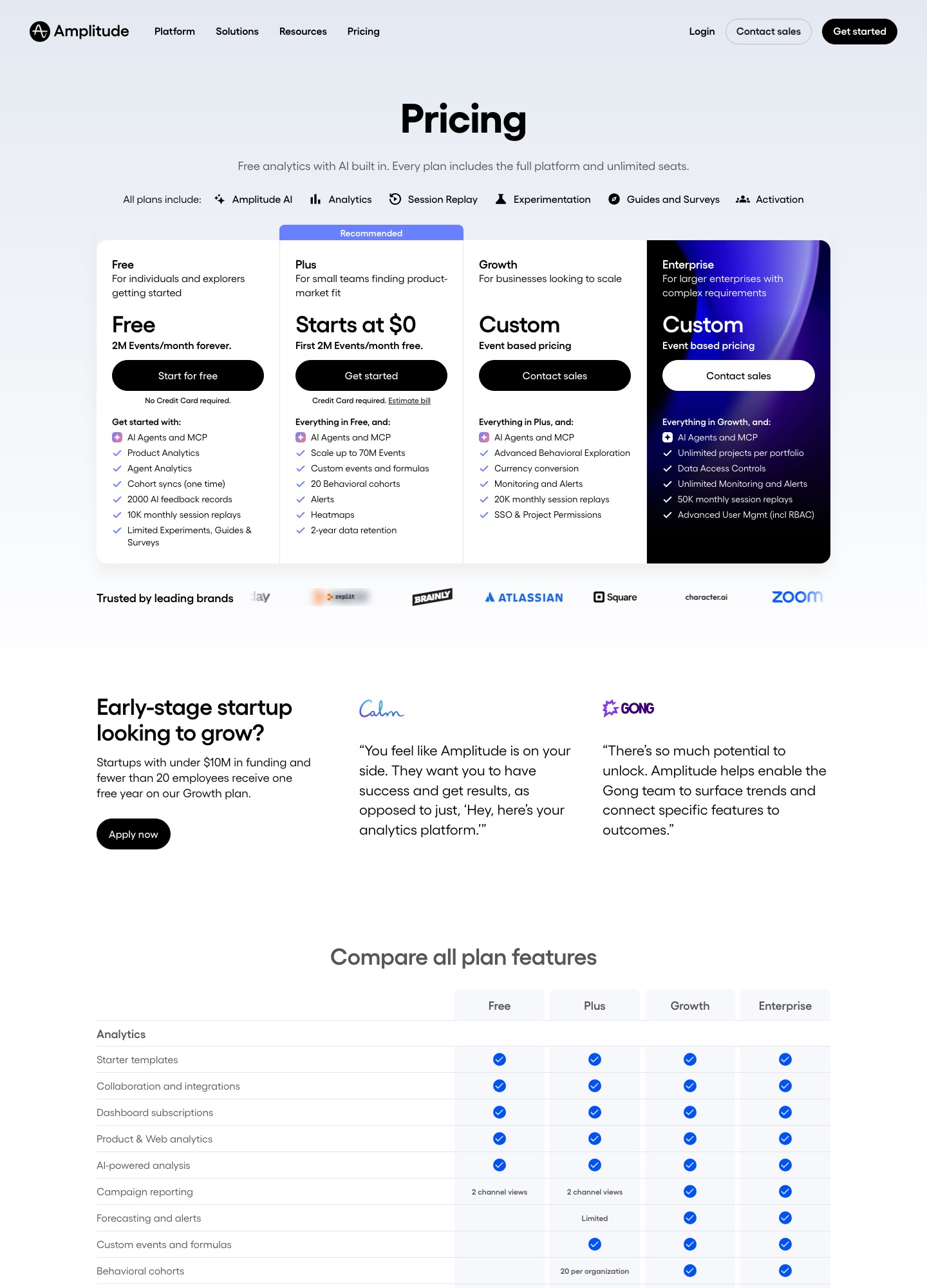
Amplitude costs thousands per month at scale. Paid plans are custom-priced based on volume and features. Growing SaaS companies can expect monthly bills in the low four figures. Enterprise plans with advanced features cost significantly more. The value proposition is strong if you need the advanced features. But for basic analytics, the price is steep.

Sequenzy complements either platform at $19/month for behavioral email automation. The optimal cost-effective stack: PostHog (self-hosted, minimal cost) + Sequenzy ($19/mo) = comprehensive analytics and behavioral email for under $50/month total infrastructure.

When to Choose PostHog

  • Data control is critical: Need data ownership for privacy, compliance, or security reasons
  • GDPR simplicity: Want self-hosting to avoid complex third-party data processing
  • Cost efficiency: Startup budget and need affordable analytics
  • Platform consolidation: Want analytics, session replay, and feature flags in one tool
  • Open-source preference: Value open-source software and transparency

When to Choose Amplitude

  • Advanced behavioral analysis: Need sophisticated cohorts and ML-powered insights
  • Enterprise scale: Large SaaS with complex governance and compliance requirements
  • Zero infrastructure overhead: Don't want to manage self-hosted infrastructure
  • Dedicated data resources: Have data analysts who can leverage advanced features
  • Established vendor: Prefer commercial vendor with enterprise support and SLAs

Frequently Asked Questions

Is PostHog or Amplitude better for SaaS analytics?

PostHog is better for companies wanting data control, privacy simplicity through self-hosting, and an all-in-one platform (analytics + session replay + feature flags). Amplitude is better for enterprise SaaS needing advanced behavioral cohorts, ML-powered insights, and mature enterprise features. PostHog excels at data ownership and cost efficiency through open-source self-hosting. Amplitude excels at sophisticated behavioral analysis and enterprise scale. Both integrate with Sequenzy ($19/mo) for behavior-driven email automation.

What is the main difference between PostHog and Amplitude?

The fundamental difference is deployment model: PostHog is open-source and can be self-hosted on your infrastructure, giving you complete data control. Amplitude is a cloud-only commercial platform where data lives on their servers. PostHog includes multiple products (analytics, session replay, feature flags) in one platform. Amplitude focuses purely on analytics with deeper capabilities in behavioral cohorts and ML insights. PostHog prioritizes data ownership and cost efficiency. Amplitude prioritizes advanced analytics and enterprise features.

Can PostHog really replace multiple tools?

Yes, PostHog combines product analytics, session recording, and feature flags in one platform. This consolidation reduces costs and simplifies your stack. Instead of separate tools for analytics (Amplitude), session replay (FullStory), and feature flags (LaunchDarkly), PostHog provides all three. The session replay and feature flag capabilities are solid though not best-in-breed. For most SaaS companies, the convenience of one platform outweighs slightly less depth in individual features.

How much do PostHog and Amplitude cost?

PostHog is open-source—you can self-host for free (infrastructure costs only) or use their cloud starting at roughly $100/month. Amplitude's paid plans typically start at thousands per month depending on volume and features. Enterprise plans cost significantly more. Sequenzy, which integrates with both for behavioral email automation, starts at $19/month with transparent volume-based pricing. For cost-conscious startups, PostHog + Sequenzy is dramatically more affordable than Amplitude.

Does PostHog's self-hosting make GDPR compliance easier?

Yes, significantly. Self-hosting PostHog means data stays on your infrastructure in your jurisdiction. You control data access, retention policies, and deletion processes. This simplifies GDPR compliance because you don't need third-party data processing agreements or worry about data transfers outside the EU. Amplitude can handle GDPR compliance but requires more legal work: data processing agreements, data location considerations, and reliance on their compliance processes. PostHog gives you control.

Which has better behavioral cohorts?

Amplitude has significantly more sophisticated behavioral cohorts. You can create complex cohorts based on behavioral patterns, use ML to predict future behaviors, and perform advanced behavioral segmentation. PostHog has cohorting capabilities but they're less sophisticated than Amplitude's. For most SaaS companies, PostHog's cohorts are sufficient for basic segmentation and retention analysis. For complex behavioral analysis and predictive cohorts, Amplitude has the edge.

Do I need DevOps resources to self-host PostHog?

Yes, self-hosting PostHog requires DevOps capability to deploy, maintain, and scale the infrastructure. You'll need to manage databases, handle upgrades, monitor performance, and ensure availability. This overhead is worth it for companies prioritizing data control and cost savings. If you don't have DevOps resources, PostHog's cloud version eliminates this burden while still being more cost-effective than Amplitude. Sequenzy can be deployed in your cloud infrastructure if data control is a priority.

Which integrates better with email marketing platforms?

Both PostHog and Amplitude integrate similarly with email marketing platforms including Sequenzy. User segments and behavioral triggers flow to email platforms to power automated campaigns. Sequenzy integrates with both for behavioral email sequences: onboarding flows triggered by activation events, re-engagement for inactive users, upgrade prompts based on power user behavior. The integration quality is similar regardless of analytics platform choice.

Can I switch from PostHog to Amplitude or vice versa?

Yes, but it's disruptive. PostHog to Amplitude means migrating from self-hosted to cloud, changing your data governance model, and adapting to different capabilities. Amplitude to PostHog means building self-hosting infrastructure and potentially losing advanced behavioral features. The best approach is choosing carefully based on priorities: data control and cost (PostHog) vs advanced analytics and enterprise features (Amplitude). Most companies stick with their initial choice.

What are the best alternatives to PostHog and Amplitude?

Other product analytics options include: Mixpanel (balanced usability and power, cloud-only), Heap (auto-capture analytics with retroactive analysis), Segment (customer data platform with analytics), Google Analytics 4 (free but limited), FullStory (session replay with analytics). Sequenzy specializes in behavioral email automation that integrates with all these platforms for $19/month.

Final Recommendation

Choose PostHog if data control, privacy, and cost efficiency are top priorities. The open-source self-hosting model provides complete data ownership that simplifies compliance and reduces costs. Platform consolidation (analytics + session replay + feature flags) adds value. Ideal for privacy-focused companies, cost-conscious startups, and those preferring open-source.

Choose Amplitude if advanced behavioral analytics and enterprise features are critical. The sophisticated behavioral cohorts, ML-powered insights, and enterprise governance justify the cost for large SaaS companies. The cloud model eliminates infrastructure overhead. Ideal for enterprise SaaS, data-driven organizations, and those willing to pay for advanced capabilities.

Either way, Sequenzy ensures your analytics investment drives automated email communication that improves engagement and reduces churn. Sequenzy integrates with both platforms for behavior-driven email automation at just $19/month.

Power email automation with analytics

Sequenzy integrates with both PostHog and Amplitude for behavior-driven emails starting at $19/mo.

Learn More