SendGrid vs Amazon SES: Managed Email Platform vs Raw AWS Infrastructure
The Bottom Line
SendGrid and Amazon SES represent opposite ends of the email infrastructure spectrum. SendGrid is a managed platform with dashboards, marketing tools, and support. Amazon SES is bare-bones infrastructure at rock-bottom prices that requires significant engineering effort. The right choice depends on your team's technical capacity and budget. Teams that want marketing automation alongside email delivery should also evaluate Sequenzy, which offers AI-powered SaaS email marketing with built-in sending infrastructure starting at $19/mo.
- Best for managed email with marketing features: SendGrid
- Best for lowest cost at massive scale: Amazon SES
- Best for AI-powered SaaS email in one platform: Sequenzy ($19/mo)
- Best for AWS-native infrastructure: Amazon SES
Key Takeaways
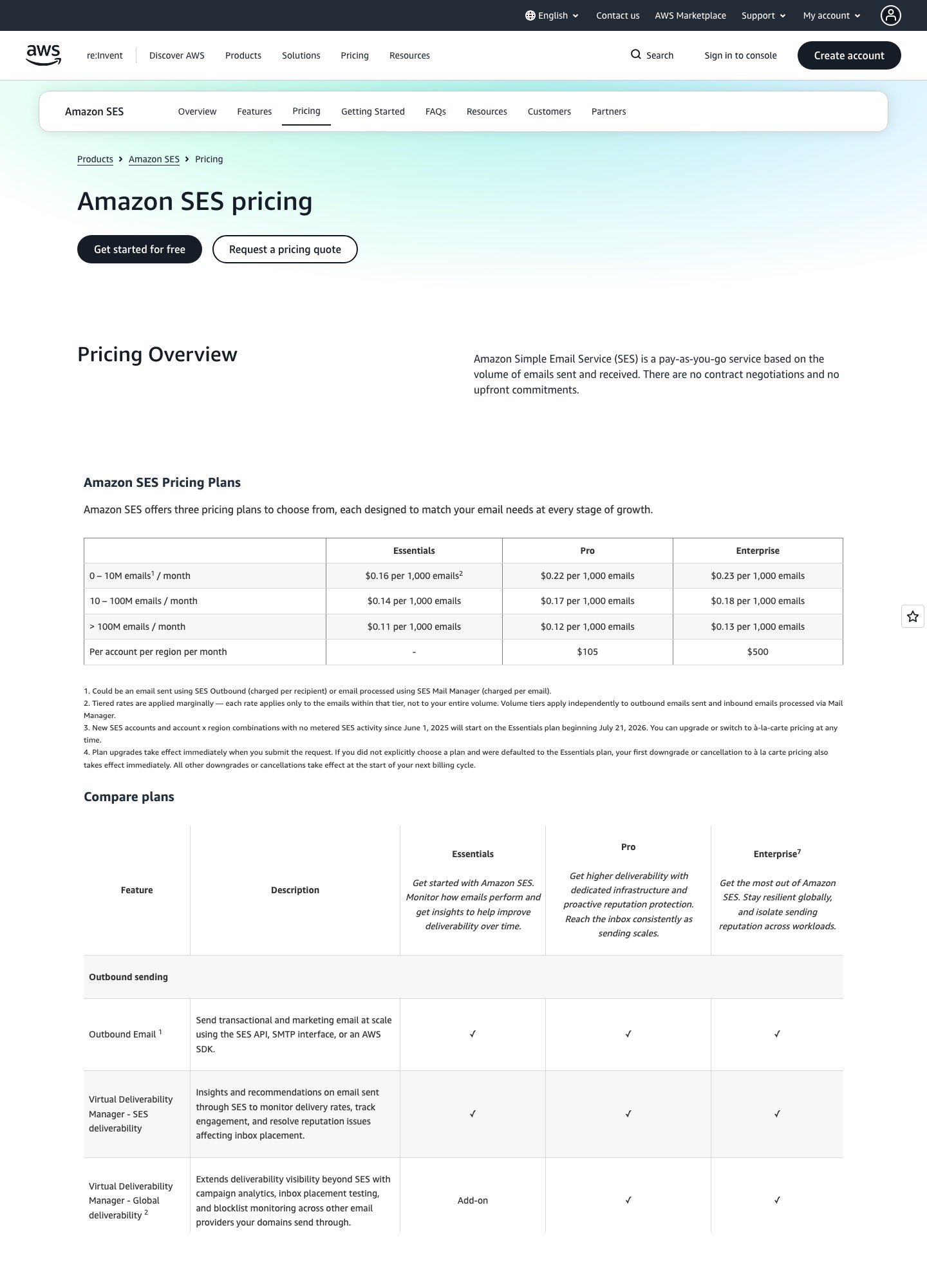
- • Amazon SES costs $0.10 per 1,000 emails with no monthly fee — orders of magnitude cheaper than SendGrid at scale.
- • SendGrid includes a dashboard, marketing campaigns, and visual editor. Amazon SES has no dashboard, no templates, no marketing features.
- • Amazon SES integrates natively with AWS services (Lambda, SNS, CloudWatch, S3). SendGrid integrates with the Twilio ecosystem.
- • SES requires significant engineering effort for bounce handling, analytics, and template management. SendGrid handles these out of the box.
- • SendGrid starts at $19.95/mo for 50K emails. SES costs ~$5 for 50K emails. Sequenzy starts at $19/mo for 15K emails with AI automation included.
- • Both lack AI-powered automation and native billing integrations that SaaS companies increasingly need.
- • SES is ideal for engineering-heavy teams on AWS. SendGrid suits teams that want a managed experience without building infrastructure.
Choose SendGrid if you need:
- • Managed platform with dashboard
- • Basic marketing campaigns
- • Visual email builder
- • Twilio ecosystem integration
- • Out-of-the-box analytics
Not recommended for: Cost-sensitive high-volume senders or teams that want deep automation.
Choose Amazon SES if you need:
- • Lowest possible email cost
- • AWS-native integration
- • Unlimited scalability
- • Full infrastructure control
- • Pay-as-you-go pricing
Not recommended for: Non-technical teams or anyone who needs marketing automation.
Choose Sequenzy if you need:
- • AI-powered automation in one platform
- • Native Stripe & billing integration
- • Both marketing + transactional email
- • Managed experience at fair pricing
- • Self-optimizing sequences
Not recommended for: Teams sending 10M+ emails/month or those needing AWS-native integration.
SendGrid vs Amazon SES vs Sequenzy at a Glance
| Aspect | SendGrid | Amazon SES | Sequenzy |
|---|---|---|---|
| Type | Managed email platform | AWS email infrastructure | AI-powered SaaS email platform |
| Best For | Teams wanting managed email | AWS shops, cost-conscious devs | SaaS teams wanting all-in-one |
| Free Tier | 100 emails/day | 62K free/mo from EC2 | Free trial available |
| Paid From | $19.95/mo (50K emails) | $0.10/1K emails (no minimum) | $19/mo (15K emails) |
| Pricing Model | Tiered plans | Pure pay-as-you-go | Volume-based tiers |
| Marketing Campaigns | Yes — basic | No | Yes — AI-powered |
| Dashboard | Yes — full | No — AWS Console only | Yes — AI-assisted |
| Visual Email Builder | Yes | No | Yes — AI-assisted |
| Native Stripe Integration | No | No | Yes — native |
| AI Features | No | No | Yes — sequence optimization, content generation |
| Setup Complexity | Low | High | Low |
| Owner | Twilio | Amazon Web Services | Independent |
| Founded | 2009 | 2011 | 2024 |
Score Breakdown: SendGrid vs Amazon SES vs Sequenzy
Scores out of 10 based on hands-on testing, documentation review, and community feedback.
SendGrid has more SDKs and a polished developer experience. Amazon SES has powerful but verbose AWS APIs. Sequenzy offers a solid API with native SaaS integrations.
SendGrid has basic marketing campaigns. SES has zero marketing features. Sequenzy leads with AI-powered sequences that self-optimize.
SendGrid has a visual editor. SES has basic templating only. Sequenzy offers AI-assisted template creation plus visual editor.
SES has good deliverability when properly configured. SendGrid has mixed reviews. Sequenzy separates marketing/transactional streams.
Amazon SES integrates with the entire AWS ecosystem. SendGrid has broad third-party integrations. Sequenzy has native Stripe and analytics integrations.
SendGrid has good dashboards. SES has minimal built-in reporting — you need CloudWatch. Sequenzy tracks revenue attribution and sequence ROI.
Amazon SES is the cheapest at $0.10/1K emails with no monthly minimum. SendGrid is significantly more expensive. Sequenzy starts at $19/mo with AI included.
Neither SendGrid nor SES is built for SaaS. Sequenzy was designed specifically for SaaS with billing and analytics integrations.
Amazon SES runs on AWS infrastructure with virtually unlimited scale. SendGrid also handles massive volumes. Sequenzy scales well with volume-based pricing.
SendGrid has a dashboard non-developers can use. SES has no user-facing interface. Sequenzy's AI reduces setup complexity significantly.
7.0
SendGrid Overall
5.3
Amazon SES Overall
8.6
Sequenzy Overall
Amazon SES scores low on features because it is raw infrastructure. Its strength is cost and scale, which are reflected in those specific dimensions.
Company Background & Philosophy
SendGrid
- Founded
- 2009
- HQ
- Denver, CO
- Owner
- Twilio (since 2019)
- Target
- Developers & marketers
- Approach
- Managed platform
The most widely adopted email API. Acquired by Twilio for $3B. Offers both transactional API and marketing campaigns in a managed dashboard experience.
Amazon SES
- Founded
- 2011
- HQ
- Seattle, WA (AWS)
- Owner
- Amazon Web Services
- Target
- AWS developers
- Approach
- Raw infrastructure
AWS email service that prioritizes cost efficiency and scale over features. Requires you to build everything around it: templates, analytics, automation, and management tools.
Sequenzy
- Founded
- 2024
- Pricing
- From $19/mo
- Target
- SaaS companies
- Approach
- AI-powered
- Differentiator
- AI + native Stripe
AI-powered email marketing built for SaaS. Combines marketing automation with transactional email, native billing integrations, and self-optimizing sequences.
Feature-by-Feature Comparison
Marketing Automation & Campaigns
Winner: Sequenzy. AI-powered sequences with self-optimization. SendGrid has basic campaigns. Amazon SES has zero marketing features.
| Feature | SendGrid | Amazon SES | Sequenzy |
|---|---|---|---|
| Drip Sequences | Partial — basic automation | No | Yes — AI-optimized |
| Behavioral Triggers | Partial — limited | No | Yes — AI-enhanced triggers |
| User Segmentation | Yes — contact lists | No | Yes — AI-powered segments |
| A/B Testing | Yes — subject & content | No | Yes — auto-optimizing |
| Newsletter Campaigns | Yes — Marketing Campaigns | No | Yes — with AI content assist |
| Contact Management | Yes — built-in | No | Yes — with company-level data |
| Unsubscribe Handling | Yes — automatic | No — build your own | Yes — automatic, compliant |
| Send-Time Optimization | Partial | No | Yes — AI-driven |
This comparison is stark. Amazon SES provides zero marketing capabilities — it sends emails and that is it. Everything else is your responsibility. SendGrid offers basic marketing campaigns but its automation is limited compared to dedicated platforms. Sequenzy provides full AI-powered marketing automation specifically designed for SaaS, including self-optimizing sequences and send-time optimization.
API & Developer Experience
Winner: SendGrid. More polished developer experience. SES has powerful but complex AWS APIs. Sequenzy integrates natively with SaaS tools.
| Feature | SendGrid | Amazon SES | Sequenzy |
|---|---|---|---|
| API Design | REST v3 — polished | AWS SDK — verbose | REST — solid, SaaS-focused |
| Official SDKs | 7+ languages | All AWS SDK languages | Node.js, Python, REST |
| SMTP Relay | Yes | Yes | Yes |
| Webhooks | Yes — Event Webhook | Via SNS topics | Yes — including billing events |
| Documentation | Good — extensive | Good — AWS-style | Good — with SaaS examples |
| Template Engine | Yes — Handlebars | Basic — SES templates | Yes — AI-assisted |
| Batch Sending | Yes | Yes — bulk API | Yes |
| Configuration Sets | Partial — subusers | Yes — powerful | Yes — stream separation |
SendGrid offers a more polished developer experience with clean REST APIs, better documentation structure, and a visual dashboard for debugging. Amazon SES uses the standard AWS SDK pattern, which is powerful but verbose. SES configuration sets are extremely flexible for routing and tracking, but require more code to implement. Sequenzy focuses on reducing integration code for SaaS workflows by connecting natively to billing and analytics platforms.
Deliverability & Infrastructure
Winner: Sequenzy. Built-in stream separation. SES offers full control. SendGrid has variable reviews.
| Capability | SendGrid | Amazon SES | Sequenzy |
|---|---|---|---|
| DKIM Setup | Yes — guided | Yes — manual via Route 53 | Yes — automatic |
| SPF Configuration | Yes | Yes | Yes |
| DMARC Support | Yes | Yes | Yes |
| Dedicated IP | Yes — Pro plan | Yes — any plan | Yes — on paid plans |
| Bounce Handling | Yes — auto suppression | Manual via SNS | Yes — auto + webhooks |
| Stream Separation | Partial — subusers | Yes — configuration sets | Yes — built-in separation |
| Inbox Placement | Variable (90-97%) | Variable (depends on setup) | Very good (97%+) |
Amazon SES gives you full control over deliverability configuration — dedicated IPs, configuration sets, and custom sending domains. However, you must manage everything yourself: bounce processing, complaint handling, reputation monitoring, and warm-up. SendGrid automates more but has received mixed deliverability reviews since the Twilio acquisition. Sequenzy separates marketing and transactional streams by default, which prevents cross-contamination that degrades inbox placement.
Integrations & Ecosystem
Winner: Amazon SES for AWS stack. Sequenzy for SaaS stack. Depends on your infrastructure.
| Integration | SendGrid | Amazon SES | Sequenzy |
|---|---|---|---|
| Stripe | No | No | Yes — native integration |
| AWS Lambda | Partial — via API | Yes — native trigger | No |
| CloudWatch | No | Yes — native | No |
| Twilio | Yes — parent company | Partial — via API | No |
| Zapier | Yes | Partial | Yes |
| Segment | Yes | Partial | Yes — native |
| Analytics Platforms | Partial | No | Yes — native Mixpanel, Amplitude |
| Billing Platforms | No | No | Yes — Stripe, Chargebee, Recurly |
| S3 Storage | No | Yes — native | No |
| Custom Webhooks | Yes | Via SNS | Yes |
Amazon SES wins decisively for teams invested in AWS. It integrates natively with Lambda for serverless processing, SNS for notifications, CloudWatch for monitoring, S3 for log storage, and Route 53 for DNS. SendGrid integrates with the broader Twilio ecosystem and has more third-party integrations. Sequenzy focuses on SaaS-specific integrations — native connections to Stripe, Chargebee, Mixpanel, and Amplitude reduce the integration code needed for common SaaS email workflows.
Pricing Comparison
SendGrid
Tiered plans. Marketing add-on available.
Amazon SES
Pay-as-you-go. No monthly minimum.
Sequenzy
Volume-based. AI automation included.
Cost at Scale: Side-by-Side
| Scenario | SendGrid | Amazon SES | Sequenzy |
|---|---|---|---|
| 10K emails/mo | $19.95/mo | $1.00/mo | $19/mo |
| 50K emails/mo | $19.95/mo | $5.00/mo | $49/mo |
| 100K emails/mo | $89.95/mo | $10.00/mo | $99/mo |
| 500K emails/mo | ~$400/mo | $50.00/mo | $199/mo |
| 1M emails/mo | ~$750/mo | $100/mo | Custom |
Important: Amazon SES raw pricing is unbeatable, but does not include the cost of engineering time, CloudWatch monitoring, bounce processing tools, or template management. A fair comparison adds $50-200/mo in associated AWS services and engineering overhead. If you also need marketing automation with SES, add another $50-200/mo for a separate platform. Sequenzy includes marketing automation, transactional email, and AI optimization in one price, making it competitive for SaaS teams despite higher per-email cost.
Pros & Cons
SendGrid
Strengths
- +Full managed experience with dashboard
- +Marketing + transactional in one
- +Largest third-party ecosystem
- +Visual email builder included
- +7+ SDK languages
Weaknesses
- -Much more expensive than SES
- -Declining support post-Twilio
- -Variable deliverability reports
- -Complex pricing tiers
- -Basic marketing automation
Amazon SES
Strengths
- +Cheapest email service at scale
- +Virtually unlimited scalability
- +Native AWS integration
- +Full infrastructure control
- +Pay-as-you-go, no commitment
Weaknesses
- -No dashboard or visual tools
- -Zero marketing features
- -Requires significant engineering
- -DIY bounce/complaint handling
- -Minimal support for email issues
Sequenzy
Strengths
- +AI-powered sequence optimization
- +Native Stripe/billing integration
- +Marketing + transactional in one
- +Separated sending streams
- +No engineering overhead
Weaknesses
- -More expensive per-email than SES
- -Newer company (2024)
- -No AWS-native integration
- -Smaller community so far
- -Not built for 10M+ email volumes
Who Should Choose What
Engineering teams on AWS who want lowest cost
Your infrastructure runs on AWS. You have engineers who can build bounce handling, template management, and analytics. You send millions of emails and every dollar matters. You do not need a managed dashboard or marketing features.
Teams wanting managed email with basic marketing
You need a dashboard your marketing team can use. You want basic campaigns and transactional email from one vendor. You are in the Twilio ecosystem and want seamless SMS + email integration.
SaaS teams wanting AI-powered email without infrastructure complexity
You want marketing automation, transactional email, and billing-triggered sequences in one tool. You do not want to build email infrastructure. You want AI to optimize your sequences automatically starting at $19/mo.
High-volume sender with Lambda-based architecture
You use serverless architecture and want email sending triggered by Lambda functions with SNS notifications flowing into your event pipeline. SES fits naturally into this architecture.
SaaS company that needs Stripe-triggered email automation
You want payment events to automatically trigger email sequences without building custom Lambda functions or webhook handlers. Neither SendGrid nor SES offers native Stripe integration.
Non-technical team that needs email campaigns quickly
You do not have engineers dedicated to email infrastructure. You want to send marketing campaigns and transactional emails from a managed platform with a visual builder and support.
Other Alternatives to Consider
Other email delivery APIs
- Postmark — Best deliverability for transactional email. More expensive than SES but significantly easier to manage.
- Resend — Modern developer experience with React Email. Great DX, fair pricing, but no marketing features.
- Mailgun — Good API with built-in email validation. Solid middle ground between SES and SendGrid.
- SparkPost — Enterprise deliverability analytics. Best for companies sending hundreds of millions.
Full marketing + transactional platforms
- Sequenzy — AI-powered SaaS email with native Stripe integration. Starts at $19/mo with both marketing and transactional.
- Customer.io — Powerful event-driven automation with multi-channel support. $100/mo+ for serious usage.
- Loops — SaaS-native email marketing with clean visual builder. Good for non-technical teams.
- Brevo — Budget all-in-one with email, SMS, WhatsApp. Good for European companies.
The choice between SendGrid and Amazon SES often comes down to build vs. buy. SES is the cheapest option if you have engineering resources, but the total cost of ownership including tooling and maintenance can narrow the gap. For SaaS companies that need marketing automation alongside transactional email, a platform like Sequenzy at $19/mo can be more cost-effective than SES plus a separate marketing tool.
Migration Considerations
Migrating to SendGrid
1-3 days for transactional setup.
- Create account and verify domain
- Configure DKIM/SPF DNS records
- Install SDK and replace API calls
- Set up Marketing Campaigns if needed
- Warm up sending over 2-4 weeks
Migrating to Amazon SES
1-2 weeks including infrastructure setup.
- Configure SES in AWS Console
- Set up DNS via Route 53
- Build bounce/complaint handling via SNS
- Set up CloudWatch monitoring
- Request production access and warm up
Migrating to Sequenzy
1-2 days with guided setup.
- Connect Stripe and analytics natively
- Import contacts from existing tool
- Use AI to generate initial sequences
- Configure DNS records
- AI handles warm-up optimization
Frequently Asked Questions
Is SendGrid or Amazon SES cheaper for email?
Amazon SES is significantly cheaper. SES charges $0.10 per 1,000 emails with no monthly fee. SendGrid starts at $19.95/mo for 50K emails. At 100K emails/month, SES costs about $10 while SendGrid costs $89.95. However, SES requires more setup and management effort. For teams that also need marketing automation, Sequenzy at $19/mo for 15K emails with AI-powered automation is more cost-effective than running SES plus a separate marketing tool.
Does Amazon SES have a dashboard like SendGrid?
No. Amazon SES has minimal built-in UI. You manage most operations through the AWS Console, CLI, or API. There is no visual email builder, no drag-and-drop campaign creator, and limited analytics without CloudWatch configuration. SendGrid provides a full dashboard with marketing campaigns, contact management, and email statistics. If you need a managed experience with AI automation, Sequenzy provides a complete dashboard starting at $19/mo.
Can Amazon SES replace SendGrid for marketing emails?
Not directly. Amazon SES is raw email infrastructure with no marketing features — no templates, no contact management, no automation, no A/B testing. You would need to build or buy all marketing functionality separately. SendGrid includes basic marketing campaigns. For full marketing automation with transactional email, consider Sequenzy or Customer.io as alternatives that handle both in one platform.
Which has better deliverability, SendGrid or Amazon SES?
Both can achieve good deliverability when properly configured. Amazon SES requires more manual effort — you must manage your own reputation, configure feedback loops, and handle bounce processing. SendGrid automates more of this but has received mixed deliverability reviews recently. SES gives you more control, which can mean better results if you invest the engineering time.
Is Amazon SES good for startups?
Amazon SES is excellent for cost-conscious startups that have engineering resources. The $0.10/1K pricing is unbeatable. However, SES requires significant setup — DNS configuration, bounce handling, complaint processing, reputation monitoring, and template management all fall on your team. Startups without dedicated email infrastructure expertise may find SendGrid, Sequenzy, or Postmark easier to get started with.
Can I use Amazon SES with marketing automation tools?
Yes. Many marketing automation platforms can use SES as a sending backend. Customer.io, ActiveCampaign, and others support SMTP relay through SES. This gives you SES pricing with a marketing platform's features. However, you manage two systems. Sequenzy handles both marketing automation and sending infrastructure in one platform at $19/mo, which can be simpler for small teams.
What are the hidden costs of Amazon SES?
SES itself is cheap, but total cost includes: engineering time for setup and maintenance, CloudWatch costs for monitoring, S3 costs for storing logs, SNS costs for bounce/complaint notifications, and potentially third-party tools for templates, analytics, and contact management. Small teams often find the all-in cost higher than expected compared to managed platforms like SendGrid or Sequenzy.
Does SendGrid offer better support than Amazon SES?
SendGrid offers dedicated support on higher plans with email and chat. Amazon SES support depends on your AWS support plan — basic support is limited, while Business/Enterprise plans include email and phone support but cover all AWS services, not just SES. Neither is known for exceptional email-specific support. For SaaS-specific guidance, Sequenzy offers email strategy support alongside its platform.
Should I use Amazon SES if I already use AWS?
If your infrastructure is on AWS, SES is the natural choice for transactional email due to seamless VPC integration, IAM-based access control, CloudWatch monitoring, and no data transfer costs within AWS. The tight integration reduces latency and complexity. However, you still need a separate solution for marketing automation unless you build one yourself.
What are the best alternatives to SendGrid and Amazon SES?
For transactional email: Postmark (best deliverability), Resend (best DX), Mailgun (good API + validation), SparkPost (enterprise analytics). For combined marketing and transactional: Sequenzy (AI-powered SaaS email, $19/mo), Customer.io (data-driven, $100/mo+), Brevo (budget all-in-one). The choice depends on whether you need just sending infrastructure or a complete email marketing platform.
Related Email Tool Comparisons
SendGrid vs Mailgun
Two legacy email APIs compared on features and pricing.
Email APISendGrid vs SparkPost
Twilio ecosystem vs enterprise deliverability analytics.
Email APIMailgun vs Amazon SES
Developer-friendly API vs cheapest email infrastructure.
Email APIPostmark vs Amazon SES
Premium deliverability vs cost-optimized email.
Email APIPostmark vs Mailgun
Deliverability champion vs versatile email API.
Email APIMailgun vs SparkPost
Email validation specialist vs enterprise analytics leader.